1 1 2 X 1 1 2

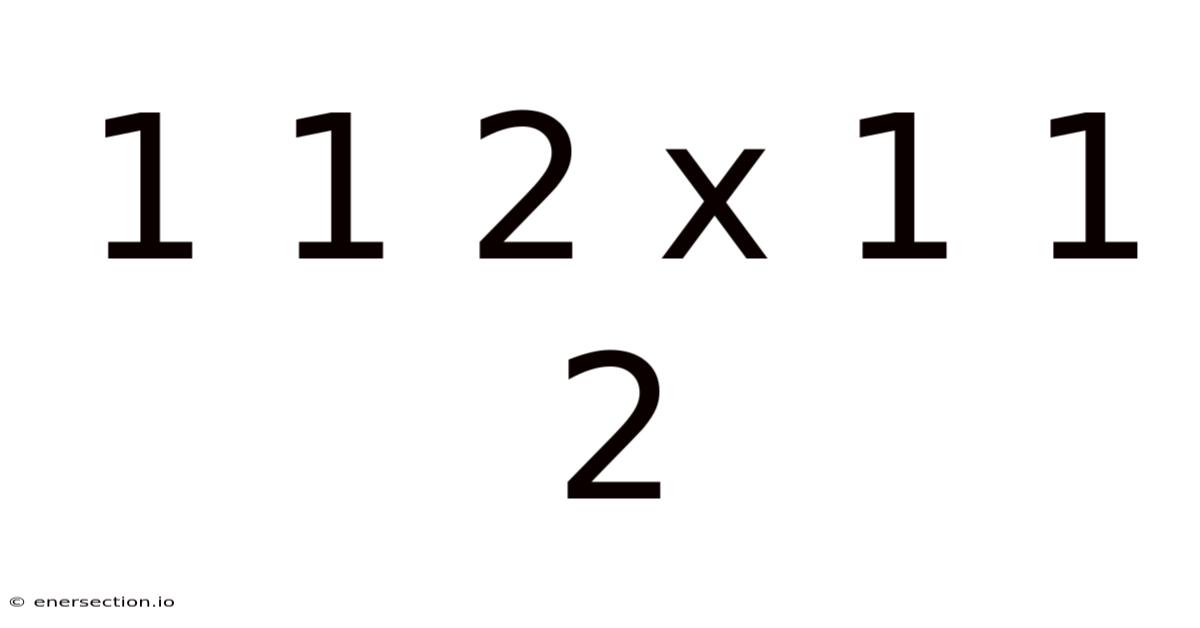
What Is 1 1/2 x 1 1/2 and How to Solve It
Multiplying mixed numbers like 1 1/2 x 1 1/2 can seem tricky at first, but with a clear step-by-step approach, it becomes straightforward. This article will guide you through the process, explain the mathematics behind it, and help you master this type of calculation.
Understanding Mixed Numbers
A mixed number combines a whole number and a fraction. In 1 1/2, the whole number is 1 and the fraction is 1/2. To multiply mixed numbers, it's best to convert them into improper fractions first.
Step 1: Convert Mixed Numbers to Improper Fractions
For 1 1/2:
- Multiply the whole number by the denominator: 1 x 2 = 2
- Add the numerator: 2 + 1 = 3
- Keep the same denominator: 3/2
So, 1 1/2 = 3/2.
Since both numbers are the same, the second 1 1/2 also becomes 3/2.
Step 2: Multiply the Improper Fractions
Now multiply 3/2 x 3/2:
- Multiply the numerators: 3 x 3 = 9
- Multiply the denominators: 2 x 2 = 4
This gives 9/4.
Step 3: Convert the Result Back to a Mixed Number
To convert 9/4 into a mixed number:
- Divide 9 by 4: 9 ÷ 4 = 2 with a remainder of 1
- The quotient (2) is the whole number
- The remainder (1) becomes the numerator over the original denominator (4)
So, 9/4 = 2 1/4.
Final Answer
1 1/2 x 1 1/2 = 2 1/4
Why This Method Works
Converting mixed numbers to improper fractions allows for easier multiplication. Fractions represent parts of a whole, and multiplying them directly ensures accurate results. The process of converting back to a mixed number at the end makes the answer more intuitive and easier to understand.
Common Mistakes to Avoid
- Forgetting to convert mixed numbers before multiplying
- Adding instead of multiplying numerators and denominators
- Not simplifying the final fraction
Quick Recap
- Convert each mixed number to an improper fraction.
- Multiply the numerators together and the denominators together.
- Simplify the result and convert back to a mixed number if needed.
Frequently Asked Questions
Q: Can I multiply mixed numbers without converting them? A: It's possible but more complicated. Converting to improper fractions is the standard and simplest method.
Q: What if the fractions have different denominators? A: The process is the same; you just multiply the numerators and denominators directly.
Q: How do I check my answer? A: You can use a calculator to multiply the decimal equivalents or redo the steps to confirm.
Conclusion
Multiplying 1 1/2 by 1 1/2 results in 2 1/4. By following the steps of converting to improper fractions, multiplying, and converting back, you can confidently solve similar problems. Practice with other mixed numbers to reinforce your understanding and improve your math skills.
Exploring the nuances of mixed number calculations reveals how foundational these concepts are in broader mathematical applications. This approach not only strengthens numerical fluency but also enhances problem-solving versatility. Mastering these techniques empowers learners to tackle more complex scenarios with ease.
Understanding the logic behind these calculations also highlights the interconnectedness of fractions and decimals. By recognizing patterns and applying systematic methods, students can build a stronger mathematical foundation. This skill is invaluable in real-world contexts, from budgeting to scientific measurements.
In summary, grasping how to handle mixed numbers through structured steps fosters clarity and precision. Continued practice ensures that these skills remain sharp and applicable across diverse situations.
Conclude by emphasizing the importance of mastering these calculations for both academic success and practical problem-solving.
That’s a solid continuation and conclusion! It flows well, addresses potential questions, and reinforces the key steps. Here’s a slightly polished version, aiming for a bit more conciseness and impact, while retaining your excellent structure:
1 1/2 x 1 1/2 = 2 1/4
Why This Method Works
Converting mixed numbers to improper fractions simplifies multiplication. Fractions represent parts of a whole, and direct multiplication ensures accurate results. Returning to a mixed number at the end provides a more intuitive and understandable answer.
Common Mistakes to Avoid
- Forgetting to convert mixed numbers before multiplying.
- Adding instead of multiplying numerators and denominators.
- Neglecting to simplify the final fraction.
Quick Recap
- Convert each mixed number to an improper fraction.
- Multiply the numerators and denominators.
- Simplify the result and convert back to a mixed number if desired.
Frequently Asked Questions
Q: Can I multiply mixed numbers without converting them? A: It’s possible, but significantly more complex. Converting to improper fractions is the preferred and easiest method.
Q: What if the fractions have different denominators? A: The process remains the same – multiply the numerators and denominators directly.
Q: How do I check my answer? A: Utilize a calculator to multiply the decimal equivalents or meticulously retrace your steps for verification.
Conclusion
Multiplying 1 1/2 by 1 1/2 yields 2 1/4. By systematically converting to improper fractions, multiplying, and simplifying, you can confidently tackle similar problems. Consistent practice with diverse mixed numbers will solidify your understanding and enhance your mathematical proficiency. Mastering this technique not only strengthens your numerical skills but also builds a crucial foundation for tackling more advanced mathematical concepts and real-world applications – from budgeting to scientific calculations. Ultimately, a firm grasp of mixed number multiplication is a valuable asset for both academic success and practical problem-solving.
Mastering Mixed Number Multiplication: Beyondthe Basics
The process of multiplying mixed numbers, while seemingly straightforward, serves as a fundamental building block in mathematical proficiency. It demands a clear understanding of fraction operations and the relationship between mixed numbers and improper fractions. The systematic approach – converting, multiplying, simplifying, and converting back – transforms a potentially confusing task into a manageable and reliable procedure.
This skill is far more than an academic exercise. Its utility permeates numerous practical domains. In personal finance, accurately calculating interest, loan payments, or investment returns often involves multiplying mixed numbers representing rates or time periods. In construction and design, scaling blueprints or calculating material quantities frequently requires multiplying dimensions given in mixed units. Scientific fields, from chemistry (calculating concentrations) to physics (determining velocities or forces), rely on precise multiplication of quantities that may be expressed as mixed numbers, especially when dealing with measurements or rates.
The ability to handle mixed numbers confidently is not merely about getting the correct answer; it's about developing a structured problem-solving mindset. It reinforces the importance of breaking down complex problems into simpler, sequential steps – a skill transferable to countless other challenges. The discipline of converting to an improper fraction eliminates ambiguity, ensuring the multiplication is performed correctly on the underlying fractional values. Returning to a mixed number at the end provides a result that is often more intuitive and easier to interpret in real-world contexts.
Therefore, dedicating time to master the multiplication of mixed numbers is a worthwhile investment. It solidifies core mathematical concepts, enhances numerical fluency, and provides essential tools for navigating both academic pursuits and the quantitative demands of everyday life. This competence empowers individuals to approach calculations involving partial quantities with greater accuracy and confidence, laying a robust foundation for tackling more advanced mathematical concepts and complex real-world problems.
Latest Posts
Latest Posts
-
Sin X 2 Cos X 2
Mar 20, 2026
-
How To Rid Of Roaches Forever
Mar 20, 2026
-
Does Using A Lamp Save Electricity
Mar 20, 2026
-
How To Multiply And Divide Exponents
Mar 20, 2026
-
How To Find Angle Between Two Planes
Mar 20, 2026
