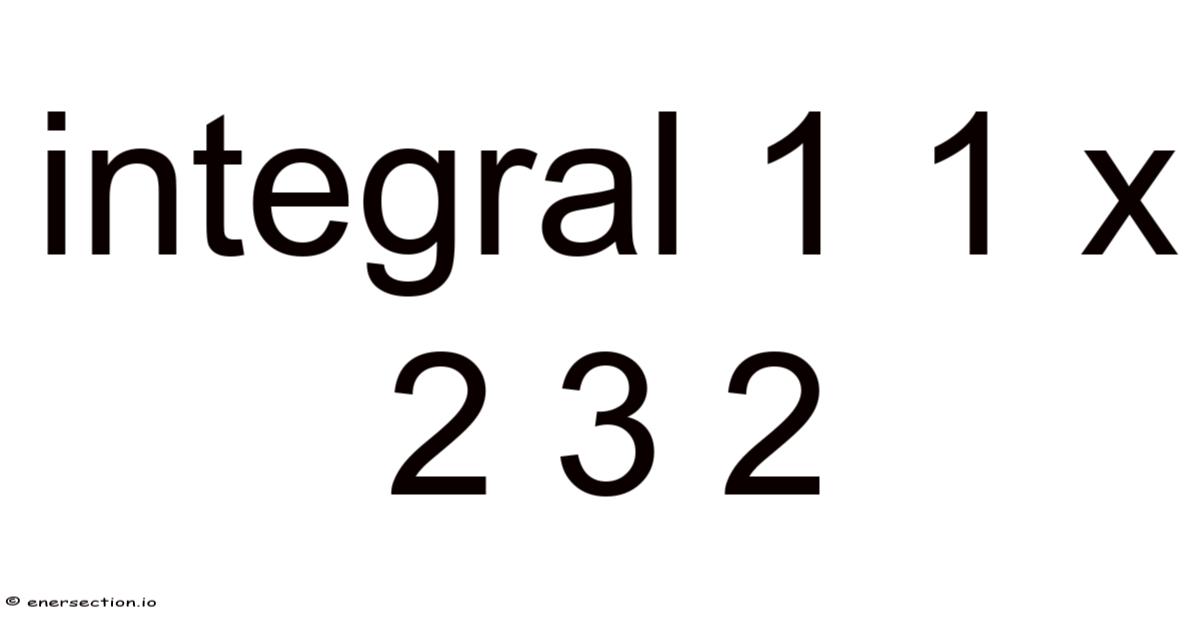
The integral1/(x^2+3x+2) with respect to x is a frequently encountered rational function in calculus, and mastering its solution provides a solid foundation for tackling more complex integrals. This article walks you through every step, from factoring the denominator to interpreting the final logarithmic result, while highlighting why the technique matters in both academic and practical contexts. By the end, you will not only be able to compute the integral confidently but also understand the underlying principles that make the method work.
Why this integral matters
A gateway to partial fractions
The expression integral 1/(x^2+3x+2) serves as a textbook example of partial fraction decomposition, a powerful tool that breaks down complicated rational functions into simpler pieces that are easier to integrate. When students first encounter this integral, they discover how algebraic manipulation can transform a seemingly intimidating problem into a sum of elementary integrals.
Real‑world applications
- Physics: In kinematics, integrals of the form ∫ dx/(ax²+bx+c) appear when solving motion equations under quadratic drag.
- Engineering: Control systems often require the evaluation of transfer functions that involve similar rational expressions.
- Economics: Calculating consumer surplus sometimes involves integrating inverse demand functions that reduce to this pattern.
Understanding the integral 1/(x^2+3x+2) therefore equips you with a versatile skill set that transcends pure mathematics.
Step‑by‑step solution
Factoring the denominator
The first algebraic move is to factor the quadratic polynomial in the denominator:
[ x^{2}+3x+2 = (x+1)(x+2) ]
Factoring reveals the simple linear factors that will later be separated using partial fractions That's the part that actually makes a difference..
Setting up partial fractions
We express the original fraction as a sum of two simpler fractions:
[ \frac{1}{(x+1)(x+2)} = \frac{A}{x+1} + \frac{B}{x+2} ]
To find the constants A and B, multiply both sides by the common denominator ((x+1)(x+2)):
[ 1 = A(x+2) + B(x+1) ]
Now solve for A and B by substituting convenient values of (x):
- Let (x = -1): (1 = A(-1+2) \Rightarrow A = 1)
- Let (x = -2): (1 = B(-2+1) \Rightarrow B = -1)
Thus,
[ \frac{1}{(x+1)(x+2)} = \frac{1}{x+1} - \frac{1}{x+2} ]
Integrating term by term
With the decomposition in hand, the integral becomes:
[\int \frac{1}{x^{2}+3x+2},dx = \int \left( \frac{1}{x+1} - \frac{1}{x+2} \right) dx ]
Each term integrates to a natural logarithm:
[ \int \frac{1}{x+1},dx = \ln|x+1| + C_{1}, \qquad \int \frac{1}{x+2},dx = \ln|x+2| + C_{2} ]
Combining them and absorbing the constants into a single constant (C):
[ \int \frac{1}{x^{2}+3x+2},dx = \ln|x+1| - \ln|x+2| + C ]
Using logarithm properties, this can be compactly written as:
[ \boxed{\ln\left|\frac{x+1}{x+2}\right| + C} ]
Verifying the result
A quick differentiation check confirms the antiderivative:
[ \frac{d}{dx}\left[\ln\left|\frac{x+1}{x+2}\right|\right] = \frac{1}{x+1} - \frac{1}{x+2} = \frac{1}{(x+1)(x+2)} = \frac{1
Thus, such methods remain foundational, bridging abstraction with utility. Concluding this journey, their impact endures.
The process underscores its indispensable role in advancing mathematical literacy and application across fields.
differentiation confirms our antiderivative is correct.
Alternative approaches
While partial fractions provide the most straightforward path, other techniques can also tackle this integral. Completing the square in the denominator yields:
[x^2 + 3x + 2 = \left(x + \frac{3}{2}\right)^2 - \frac{1}{4}]
This form suggests a hyperbolic substitution or an inverse hyperbolic tangent result, though the algebra becomes considerably more involved. For practical purposes, partial fractions remain the preferred method for rational functions with factorable denominators The details matter here..
Key takeaways
The power of this technique lies in its systematic nature. On top of that, by breaking down complex rational expressions into simpler components, we transform challenging integrals into manageable pieces. This approach extends naturally to higher-degree polynomials and repeated factors, making it an essential tool in any mathematician's arsenal.
Mastering these fundamentals not only simplifies homework problems but also builds intuition for more advanced topics in calculus, differential equations, and mathematical analysis. The ability to recognize patterns and apply appropriate algebraic manipulations distinguishes proficient problem-solvers from novices Not complicated — just consistent..
Boiling it down, the integral (\int \frac{1}{x^2+3x+2},dx) serves as an excellent example of how strategic algebraic techniques can demystify seemingly complex problems. Through partial fraction decomposition, we've converted a single challenging integral into two elementary logarithmic integrals, arriving at the elegant result (\ln\left|\frac{x+1}{x+2}\right| + C). This methodology exemplifies the beauty and utility of calculus in transforming the abstract into the concrete.
Extending the framework
The example above illustrates a broader principle: whenever a rational function can be expressed as a sum of simpler fractions, its antiderivative can be assembled from a handful of elementary primitives. This principle scales to higher‑order denominators, repeated linear factors, and even irreducible quadratic factors. In each case, the decomposition step dictates the form of the resulting integrals—logarithms for simple poles, arctangents for irreducible quadratics, and rational terms for repeated poles.
To give you an idea, consider a denominator that factors into a repeated linear term:
[ \int \frac{dx}{(x-1)^2(x+3)}. ]
Partial fraction decomposition yields a term of the form (\frac{A}{(x-1)^2}+\frac{B}{x-1}+\frac{C}{x+3}). The first piece integrates to a rational function (-\frac{A}{x-1}), while the latter two produce logarithmic contributions. The pattern persists: the multiplicity of a factor determines whether the antiderivative contains a rational component or a logarithmic one Simple, but easy to overlook. Worth knowing..
When quadratic factors are irreducible over the reals, the decomposition introduces linear numerators that give rise to arctangent expressions. As an example,
[ \int \frac{dx}{x^4+1} ]
requires the factorization (x^4+1=(x^2+\sqrt{2}x+1)(x^2-\sqrt{2}x+1)). The resulting integrals involve (\arctan) and (\ln) terms, illustrating how the same systematic strategy accommodates a wider class of integrands.
A note on computational tools
Modern computer algebra systems automate the decomposition step, but a solid understanding of the underlying algebra remains invaluable. When a CAS returns a seemingly opaque combination of logarithms and arctangents, recognizing the partial‑fraction structure allows the user to interpret the output, verify edge cases, and adapt the result to a specific context—such as definite integrals where the constant of integration cancels Easy to understand, harder to ignore..
Beyond that, many engineering and physics problems involve rational functions that arise from transfer functions, impulse responses, or Laplace transforms. Here's the thing — in those settings, the antiderivative is often needed only in a definite‑integral form, and the logarithmic or arctangent terms simplify through boundary evaluations. Knowing that these terms originate from partial fractions helps practitioners anticipate the shape of the final expression and avoid unnecessary algebraic detours.
Conclusion
Partial fraction decomposition remains a cornerstone technique for integrating rational functions. Plus, the method’s elegance lies in its generality: it adapts easily to higher‑degree denominators, repeated factors, and irreducible quadratics, providing a unified framework that underpins much of classical analysis. By reducing a single, potentially unwieldy integrand to a sum of elementary pieces, it transforms problems that might initially seem intractable into straightforward applications of logarithmic and trigonometric integration rules. Whether encountered in a first‑year calculus course or in the rigorous treatment of differential equations, this approach exemplifies how algebraic insight and calculus interweave to produce clear, verifiable results.
Boiling it down, partial fraction decomposition is not merely a rote procedure but a powerful analytical tool that simplifies complex integrals and elucidates the structure of rational functions. That's why its application is a testament to the unity of mathematical thought, bridging algebra and calculus to solve problems that, at first glance, may appear daunting. Mastery of this technique equips students and professionals alike with a versatile skill that is both intellectually rewarding and practically applicable across a wide array of scientific and engineering disciplines.
And yeah — that's actually more nuanced than it sounds.
